Copper Rod Cold Rolling Line
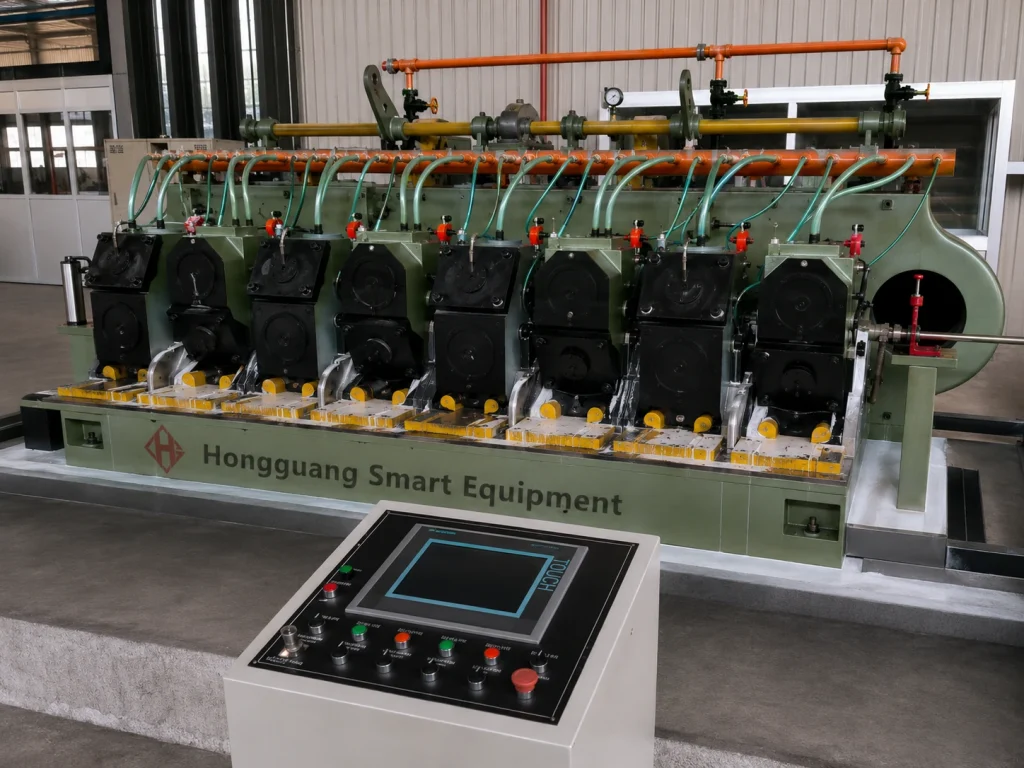
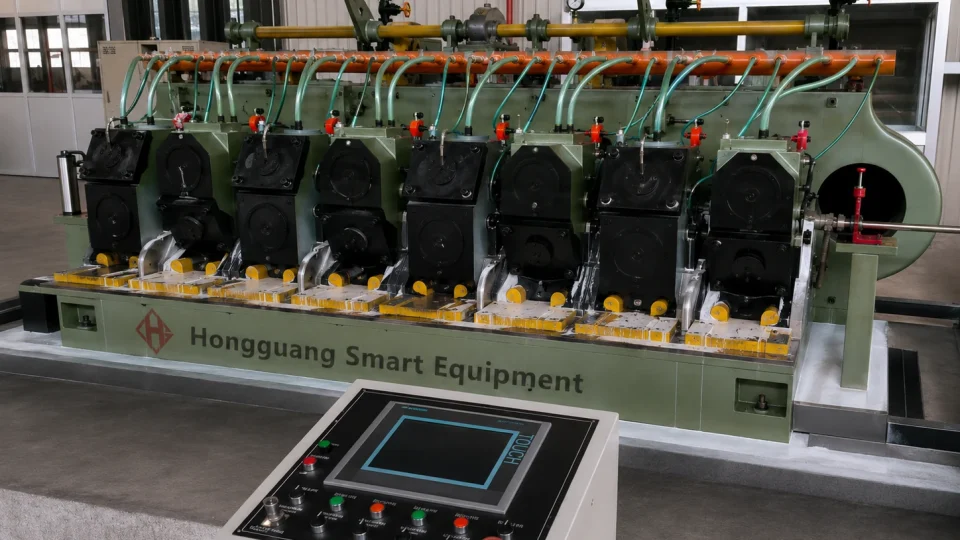
Our Z-series line cold-reduces upward-cast oxygen-free or alloy copper rod before wire drawing. Designed for an existing feed rod, it connects pay-off, rolling, lubrication and take-up without adding a melting or casting stage.
Key Features
• Designed for upward-cast oxygen-free and alloy copper rod.
• DC main drive supports controlled speed and torque through the rolling range.
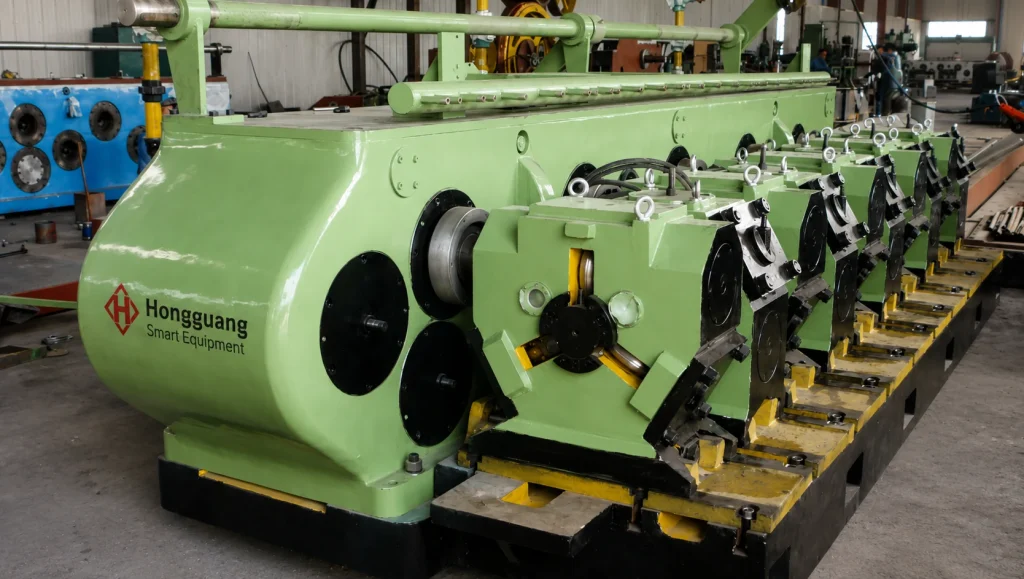
• Shaft-mounted transmission reduces the number of separate drive interfaces.
• Active feeding and rod-stacking parking functions help control transient material flow.
• Lubrication, take-up and electrical control are integrated with the rolling section.
Equipment Composition
The production line is mainly composed of:
• Pay-off stand
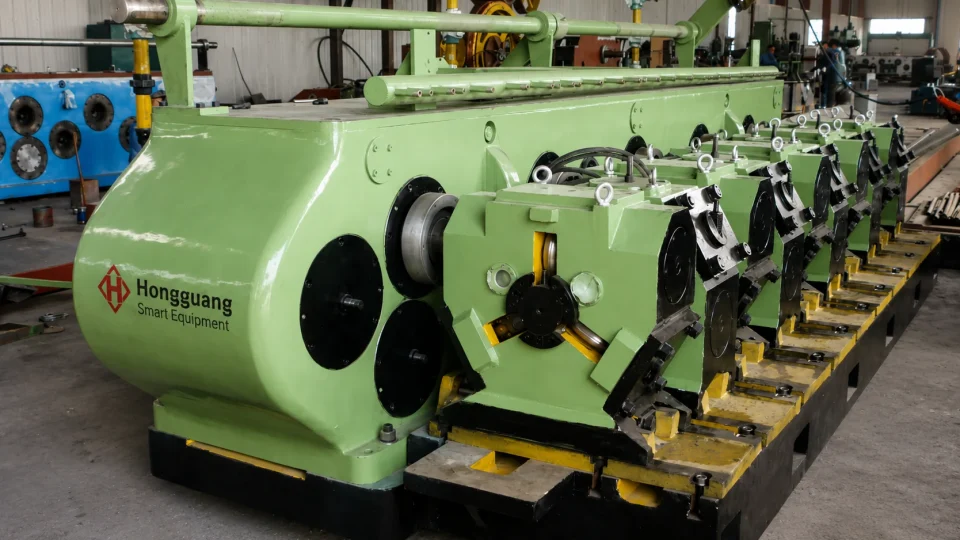
• Continuous rolling mill
• Lubrication system
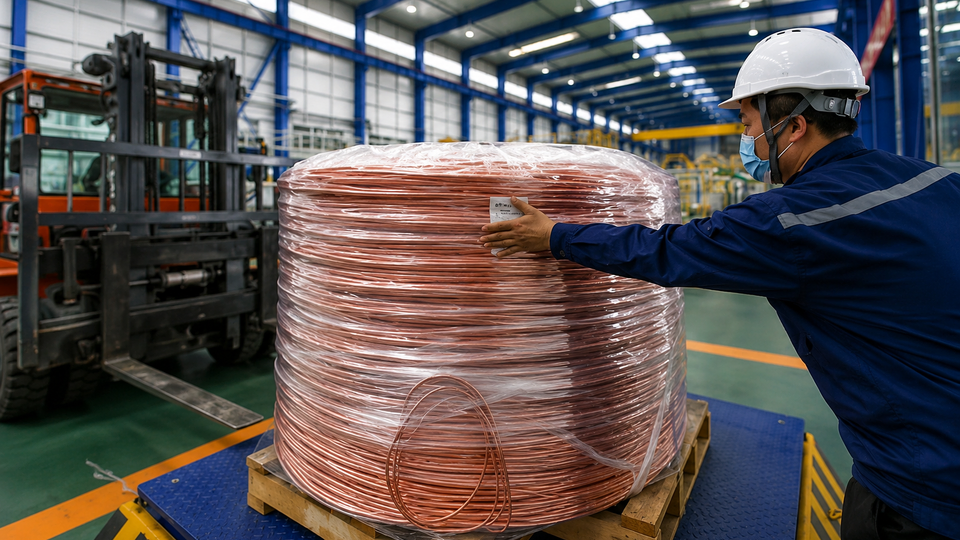
• Rod retracting device
• Electrical control system
Technical Parameters
| Feed Diameter (mm) | Rod Diameter (mm) | Number of Stands | Rolling Speed (m/min) | Capacity (t/h) | Loop Weight (t) | Motor Power (kW) | Roller Size (mm) |
|---|---|---|---|---|---|---|---|
| 14 | 8 | 8 | 3 | 1.5–3.2 | 1.5–2 | 90 | 255 |
| 17 | 8 | 10 | 3 | 1.5–3.2 | 1.5–2 | 132 | 255 |
| 20 | 8 | 12 | 3 | 1.5–3.2 | 1.5–2 | 165 | 255 |
| 22 Alloy Rod | 8 | 12 | 3 | 1.5–3.2 | 1.5–2 | 165 | 255 |
What Determines Rolling Stability
Stable cold rolling starts with consistent feed rod and a reduction schedule suited to the copper grade and downstream drawing process. Reduction per stand, roll alignment, lubrication and take-up tension must be considered together so that the rod passes through the mill under controlled conditions.
The listed speed and stand ranges provide a starting point for selection. We confirm the mill arrangement and operating duty from the actual feed-rod condition, required reduction and collection format.
Suitable Feedstock
Upward-cast oxygen-free copper rod and alloy copper rod with a defined input diameter, surface condition and dimensional tolerance.
Typical Applications
Intermediate rod reduction before conductor-wire drawing, including oxygen-free and alloy copper production routes.
Planning a Copper Cold-Rolling Line
Tell us about your incoming copper rod and the size you need before drawing. You can begin with the information already available. For the mill proposal, we review the copper grade, rod condition, inlet and outlet diameters, speed and drawing duty, then select the stands, roll passes, lubrication and take-up together. Line direction, power and available installation length are confirmed during the layout review.
From Rod Data to Mill Proposal
In our technical proposal, we define the stand arrangement, drive, lubrication, take-up and agreed interfaces. We confirm final speed and power from the reduction schedule and feed-rod condition.
Compare this route with casting and wire drawing in the Copper Processing Lines guide.
Learn about our manufacturing and project support, or browse our latest Projects & Insights.