
Aluminum Rod Continuous Casting and Rolling Line
Our UL+Z line produces conductive rod from pure aluminum and suitable aluminum alloys. It combines melting and melt treatment with continuous casting, heating, rolling, cooling and collection, configured for the alloy and finished rod required by your downstream process.
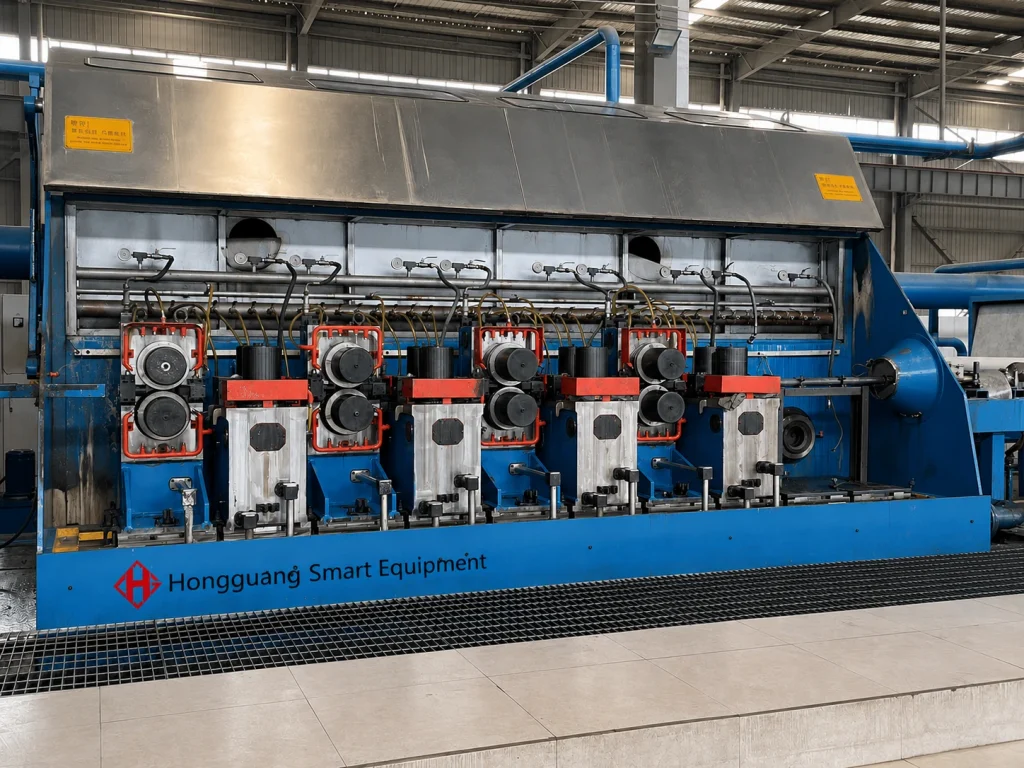
Key Features
• Melt treatment can include online degassing and filtration before casting.
• The five-wheel casting machine provides continuous billet to the rolling section.
• Induction heating controls billet temperature entering the mill.
• Active feeding and rod-stacking parking functions support material-flow control.
• Rolling, cooling and collection are arranged for the selected alloy and rod duty.
Equipment Composition
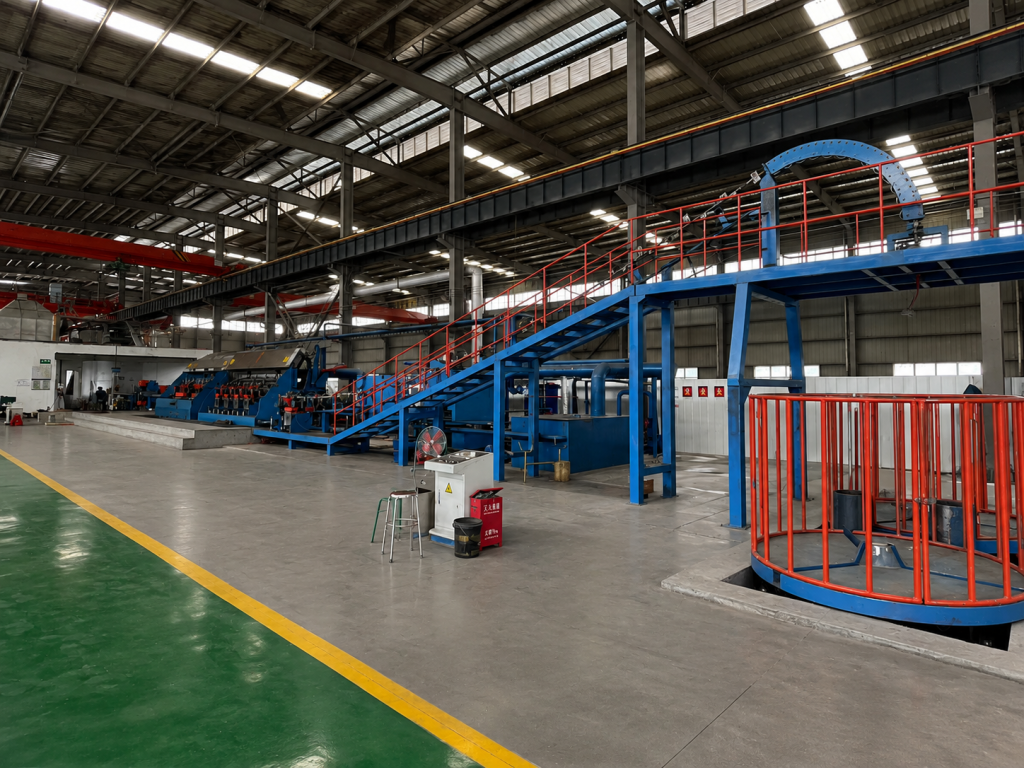
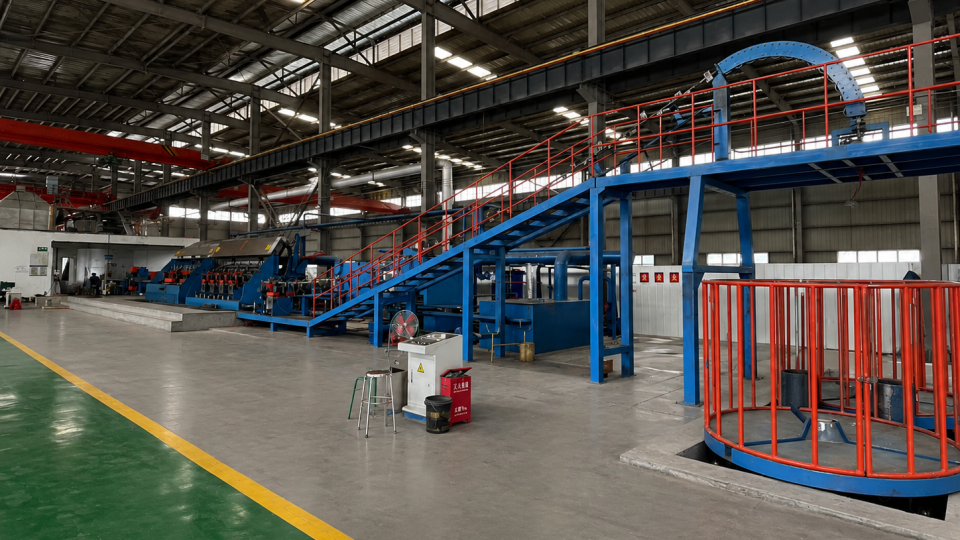
The production line is mainly composed of:
• Melting furnace (vertical furnace)
• Holding furnace
• Five-wheel integral continuous casting machine
• Rolling shear
• Straightening machine
• Roughening machine
• Induction heater
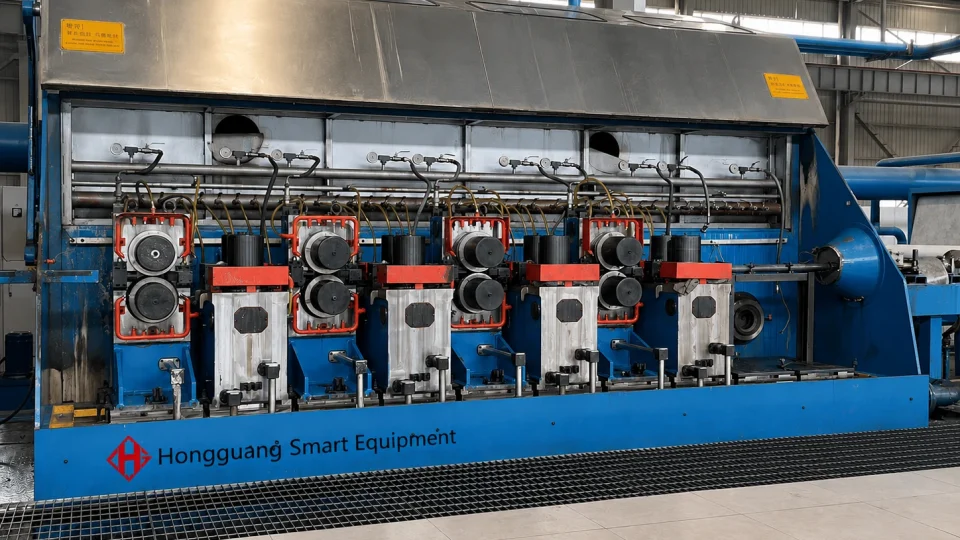
• Continuous rolling mill
• Lubrication system
• Cooling device
• Rod collecting device
• Electrical control system
Technical Parameters
| Model | Product Diameter (mm) | Crystal Wheel Diameter (mm) | Casting Cross-Sectional Area (mm²) | Stand Form | Rolling Speed (m/min) | Output (t/h) | Total Power (kW) |
|---|---|---|---|---|---|---|---|
| UL+Z-1600/9.5+255/15 | 9.5, 12, 15 | 1600 | 2300 | 15 | 7.6 | 5.5 | 500 |
| UL+Z-1600/9.5+330/2+255/12 | 9.5, 12, 15 | 1600 | 2300 | 2+12 | 7.6 | 5.5 | 500 |
| UL+Z-2100/9.5+330/4+255/10 | 9.5, 12, 15 | 2100 | 3200 | 4+10 | 9.5 | 7.5 | 800 |
| Model | Product Diameter (mm) | Crystal Wheel Diameter (mm) | Casting Cross-Sectional Area (mm²) | Stand Form | Rolling Speed (m/min) | Output (t/h) | Total Power (kW) | Heater Power (kW) |
|---|---|---|---|---|---|---|---|---|
| UL+Z-1600/9.5+255/15 | 9.5, 12, 15 | 1600 | 2300 | 15 | 7.6 | 4 | 850 | 350 |
| UL+Z-1600/9.5+330/2+255/12 | 9.5, 12, 15 | 1600 | 2300 | 2+12 | 7.6 | 4 | 900 | 350 |
| UL+Z-2100/9.5+330/4+255/10 | 9.5, 12, 15 | 2100 | 3200 | 4+10 | 9.5 | 6 | 950 | 400 |
| UL+Z-1400/9.5+255/12 (Aluminum Titanium Boron) | 9.5, 12, 15 | 1400 | 1600 | 12 | 7.6 | 2.5 | 500 | — |
What Determines Rod Quality and Output
Alloy chemistry, melt temperature and cleanliness guide the selection of degassing, filtration and the casting arrangement. Induction heating and the rolling stands are then matched to the required billet temperature and rod specification, with cooling considered as part of the same process.
The capacity range provides an initial reference. We confirm the material specification, casting stability and finished-rod requirements before defining the line configuration and operating duty, so the selected equipment reflects the alloy being processed.
Suitable Feedstock
Pure aluminum and confirmed conductive aluminum alloys, including 1, 6 and 8 series duties and aluminum-titanium-boron applications. We review final alloy compatibility against the required rod properties.
Typical Applications
Conductive rod for electrical wire and cable, downstream drawing and alloy-rod applications.
Planning an Aluminum Rod Line
Tell us the aluminum or alloy you plan to process and the rod you want to produce. Share a target output if you have one. We then review the incoming metal, rod diameter, required properties and drawing duty, followed by melt treatment, fuel or power, cooling water, collection format, layout and destination standards.
From Alloy Data to Technical Proposal
In our proposal, we set out the melt-treatment route, casting section, rolling stands, cooling, collection and agreed utilities. We confirm final performance for the alloy and finished rod specification.
Compare rod, wire, ingot and strip duties in the Aluminum Processing Lines guide.
Learn about our manufacturing and project support, or browse our latest Projects & Insights.