Project Brief
Market: India
Project stage: two-day technical visit completed and equipment order signed
Equipment: copper rolling mill with hydraulic coiling
Engineering focus: a denser, more controlled coil package for handling, storage and long-distance transport
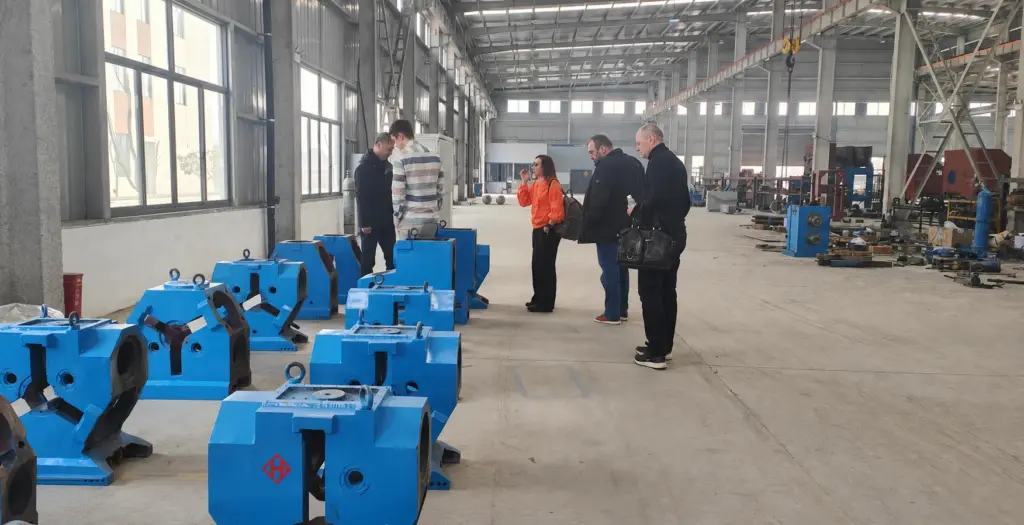
On 23 and 24 January 2026, an Indian customer visited our Deyang manufacturing facility to complete the technical review of a copper rolling mill project. The discussion went beyond the mill stands. The customer needed the finished rod to leave the line in a coil that could be handled consistently, stored without unnecessary space and prepared for a long export journey. We therefore reviewed the rod specification, production duty, collection method and transport package as one connected requirement. By the end of the visit, the agreed solution included a hydraulic coiling system and the parties signed the equipment order.
Why the coiling section became a project decision
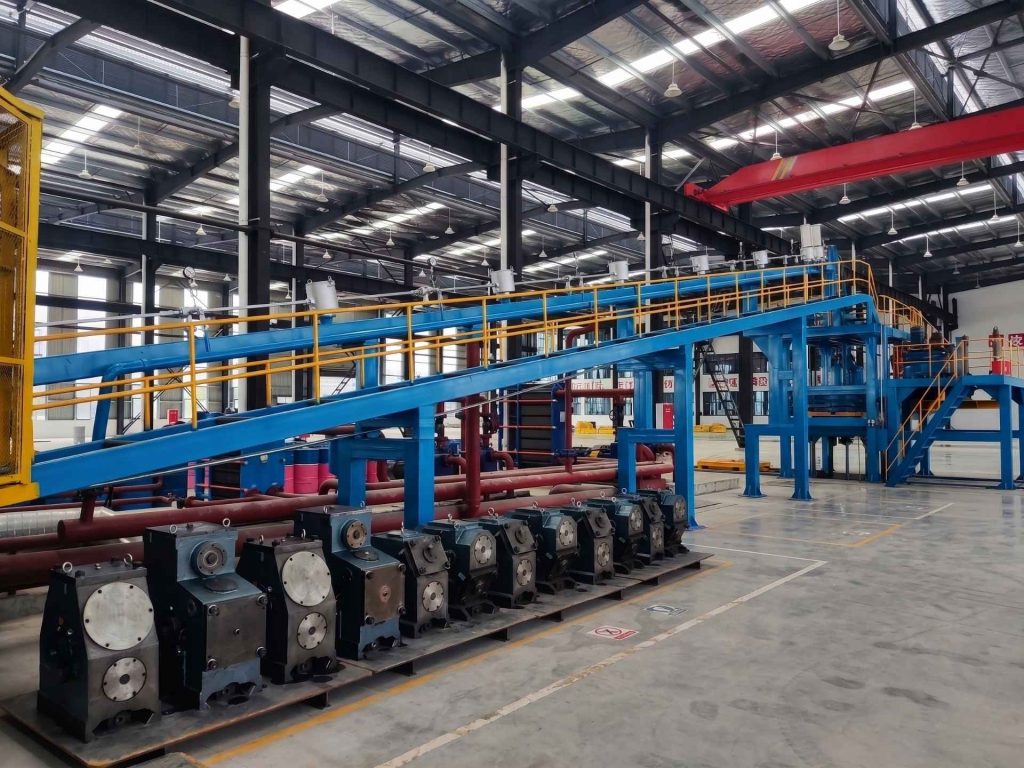
In a copper rod production route, the rolling stands reduce the incoming section through successive passes, while cooling and collection must remain coordinated with rod diameter and line speed. The collection section is not an accessory added after the main process has been selected. If the coiler cannot accept the rod steadily or form the required package, it can limit handling efficiency even when the upstream mill is operating correctly. For this project, the customer’s warehouse and shipment method made coil formation an early design input rather than a question to leave until installation.
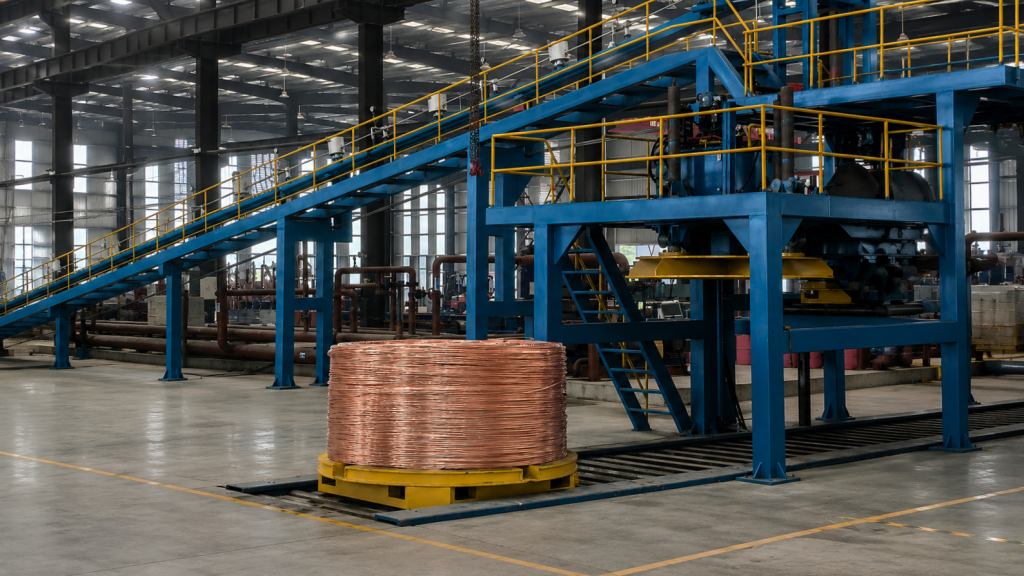
The proposed hydraulic system is designed to form a tighter, more manageable coil by controlling the collection and compaction stages more closely than a loose collection arrangement. A compact package uses storage space more efficiently and simplifies strapping, palletizing and loading. The final coil density and packing format will be set against the finished rod diameter, coil weight, line speed, cooling condition and the customer’s handling practice so that the collection section and logistics plan work together.
From the factory review to detailed engineering
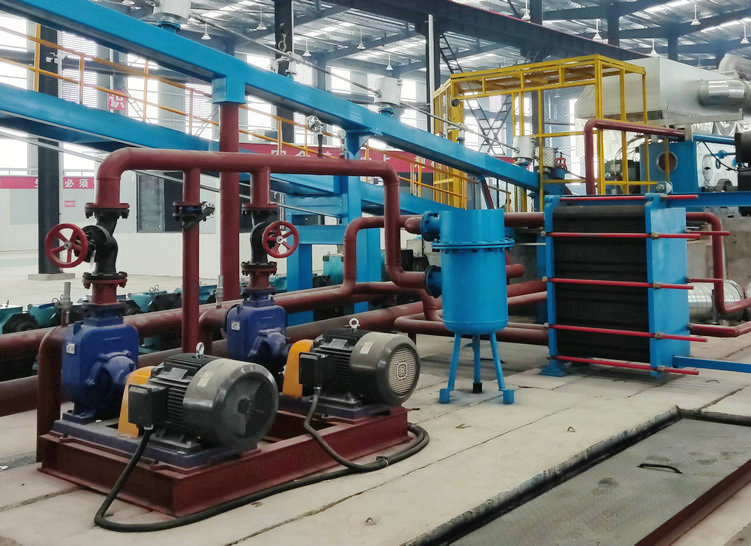
During the visit, our engineers also worked through the interfaces around the rolling and coiling sections: feedstock and incoming section, target rod size, required output, available power and cooling water, floor space, lifting and maintenance access, and the route from the coiler to the storage area. Looking at these items together prevents a compact coil from creating a new bottleneck at the next handling stage. It also gives the customer a clearer basis for planning foundations, utilities and downstream packaging before the equipment reaches site.
With the order signed, the project moves into detailed engineering and manufacture. The final technical documents will define the stand arrangement, drive and control interfaces, coiling parameters, supply boundary and site responsibilities. Pre-shipment checks will verify the agreed equipment functions before dispatch, while installation guidance and commissioning support will follow the contract scope. The purpose of the January visit was therefore practical: to turn a product request into a line configuration that reflects how the customer will actually produce, move and ship copper rod.
For producers comparing copper rolling and collection arrangements, the most useful starting information is the feedstock or incoming section, finished rod diameter, target output, required coil weight and package, downstream process, plant layout and destination logistics. These inputs allow the mill and coiling system to be assessed together instead of as separate purchases.
Planning a Copper Rolling and Coiling Project?
Tell us what you want to produce and where the equipment will be installed. Share the details you already have; our team can help clarify the remaining requirements.
Explore the Copper Rod Continuous Casting and Rolling Line to review typical configurations and the available equipment scope.
Product and package review
Rolling and coiling configuration
Manufacturing in Deyang
Installation and commissioning support to the agreed project scope