Copper rod and wire production follows three different starting points. A casting and rolling line begins with electrolytic copper or scrap-derived FRHC feedstock. A cold rolling line begins with existing upward-cast rod. A drawing line begins with rod and ends with conductor wire.
Choose the route from the material already available and the product you need next. Diameter and capacity matter, but they do not replace this first process decision.
Three Copper Routes, Three Different Starting Points
Copper Rod Casting and Rolling
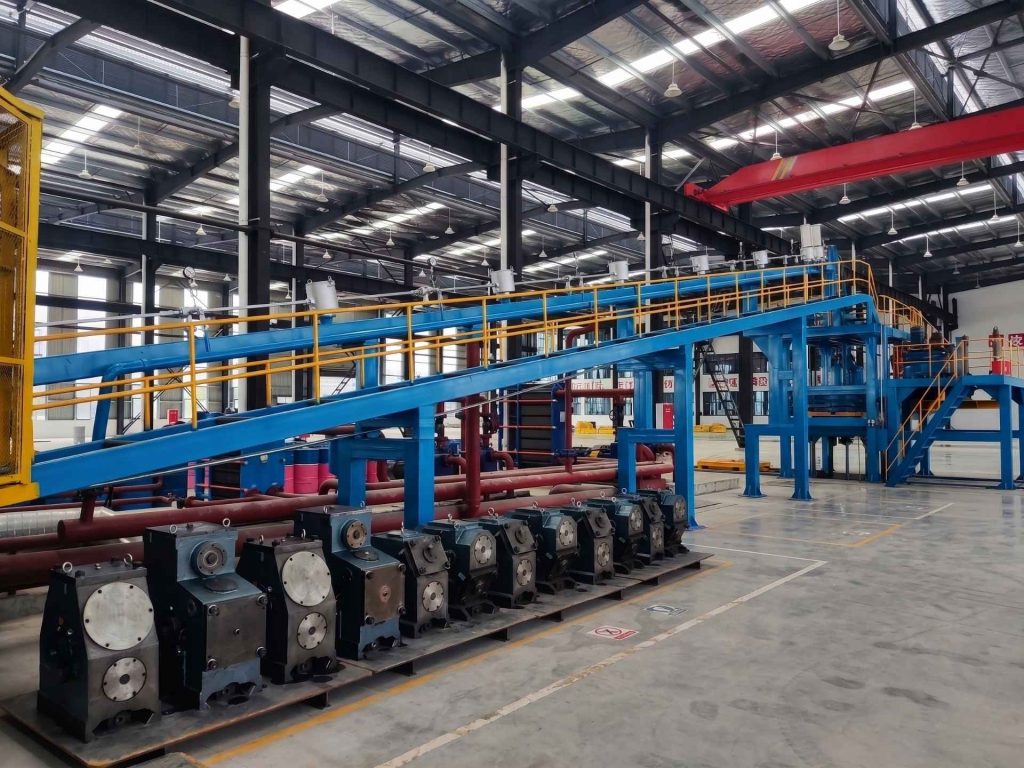
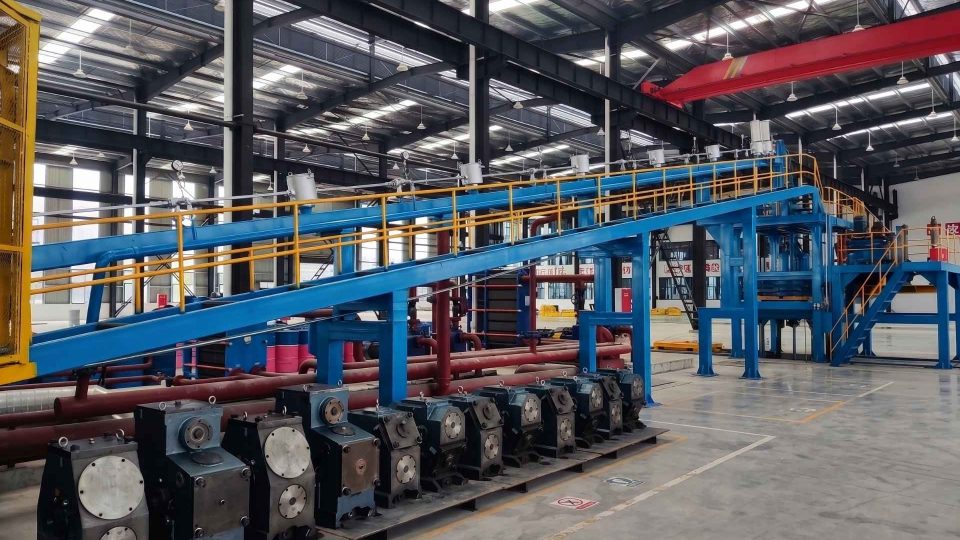
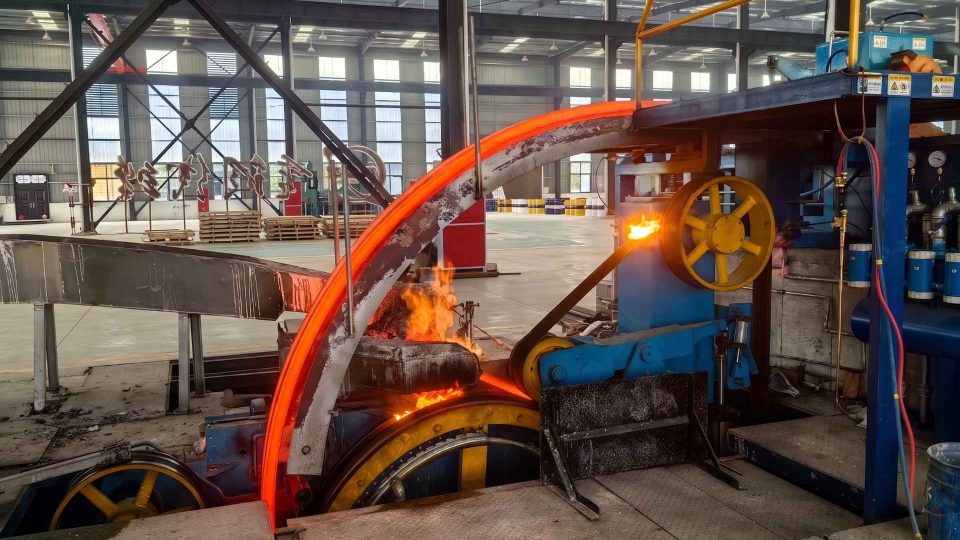
This is the route for producing new coiled rod from copper feedstock. ETP production normally uses a vertical and holding furnace arrangement; FRHC production requires a furnace system suited to scrap melting. The casting section, rolling stands, cooling and rod collection are then matched to the required rod diameter and output.
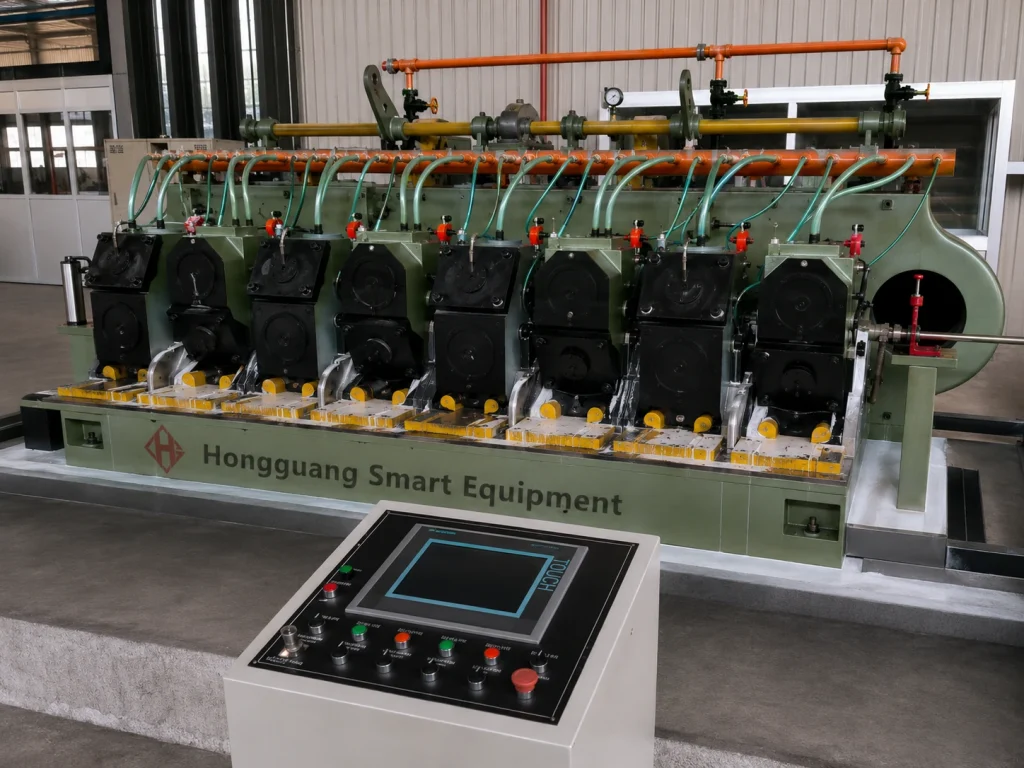
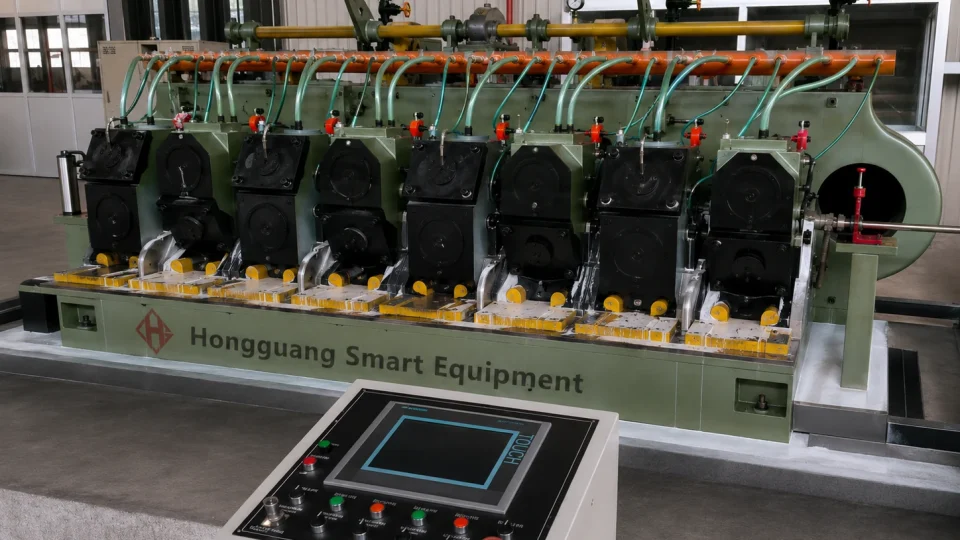
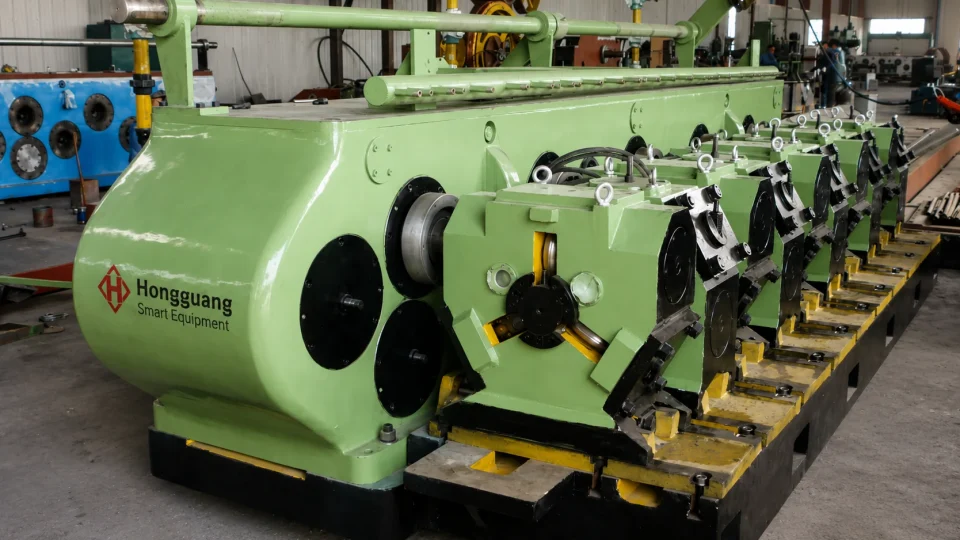
The Z-series line is for plants that already have upward-cast oxygen-free or alloy copper rod. It cold-reduces that rod through a defined stand arrangement before downstream drawing. Pay-off, lubrication, rolling stability and take-up are more important here than furnace or casting selection.
Choose this route when the feed rod already exists and controlled reduction is the missing stage. Review the cold rolling line →
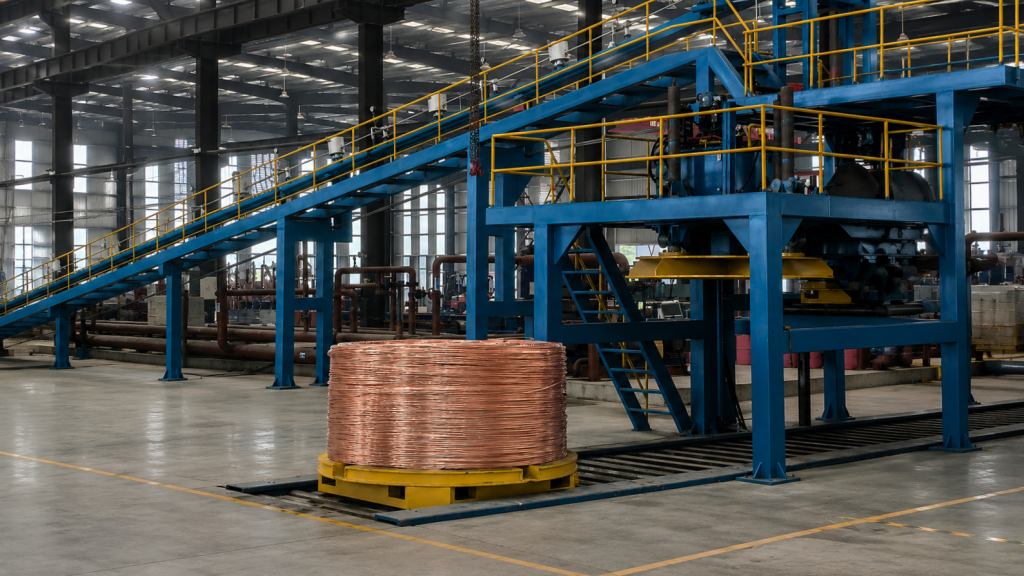
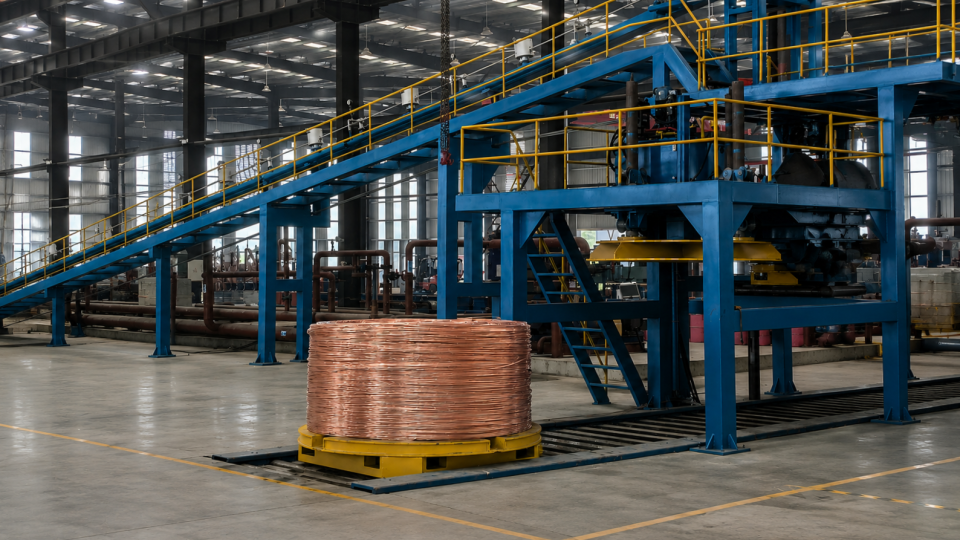
Copper rod feedstock for wire drawing.
Drawing Rod into Conductor Wire
Large- and medium-drawing machines reduce rod to the wire diameter required by the conductor process. The reduction schedule, number of passes, annealing duty and final reel or coil package determine the machine configuration. Continuous annealing is selected only when the finished wire specification requires it.
Tell us what copper material you have and whether you want to produce rod or finished wire. We can help you compare the appropriate route, even if the project is still at an early stage.
For the technical proposal, we work through the feedstock route, finished diameter, output or line speed, annealing requirements and collection package. We also review furnace fuel, power, layout and connections to existing equipment. If you already have this information, the RFQ Checklist provides a useful way to organize it.