Project Brief
Market: Philippines
Project stage: four-day site and process review completed; technical concept under development
Equipment: copper rod continuous casting and rolling line
Engineering focus: a two-level arrangement for limited foundation depth and an LPG-fired melting route
From 22 to 25 January 2026, a customer from the Philippines visited our Deyang facility to develop the basis for a new copper rod production line. The first discussions were not about choosing a standard model. They were about whether a complete line could be arranged around the customer’s building, shallow-foundation constraint and available fuel. We reviewed the intended material route, output, furnace duty, environmental equipment, casting and rolling sequence, and the space required for operation and maintenance. That work led to a two-level layout concept and an LPG-fired melting proposal for further engineering.
Designing the line around the building
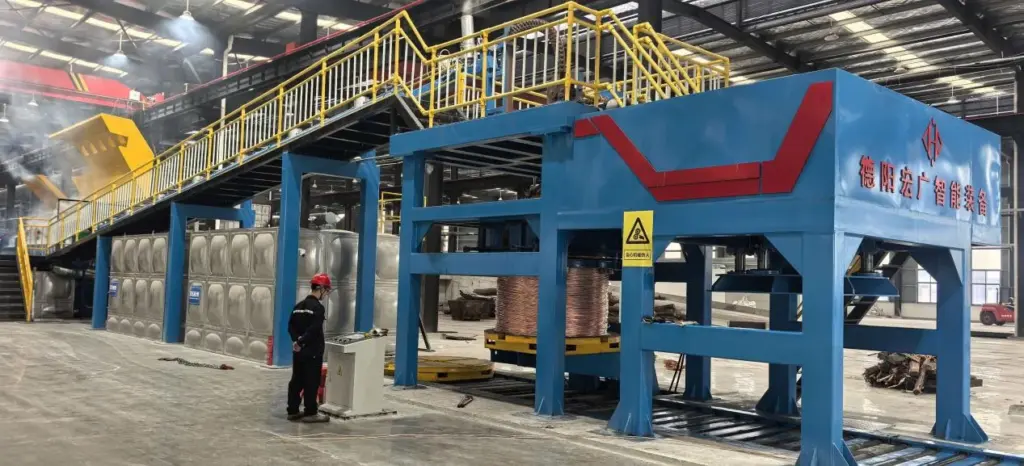
A copper rod continuous casting and rolling line connects several sections that cannot be positioned independently: melting and holding, continuous casting, billet transfer, rolling, cooling and rod collection. The casting and rolling elevations, equipment loads and material direction influence the civil work beneath the line. At this site, deep excavation was not a practical assumption. Our engineers therefore proposed using a raised operating platform to organize part of the process vertically and reduce the need for an unnecessarily deep pit.
The two-level concept is intended to use the available building height more effectively while keeping the production route continuous. It also changes how operators reach the equipment and how maintenance parts are removed, so the final arrangement must account for stairs and platforms, lifting access, guarding, escape routes and clear working space around the furnace and rolling sections. Before the layout can be released for civil design, the customer will need to confirm the building survey, permissible foundation loads, floor levels, crane coverage and access for equipment installation. A raised platform solves one site constraint only when these interfaces are engineered with it.
Matching the melting furnace to the available fuel
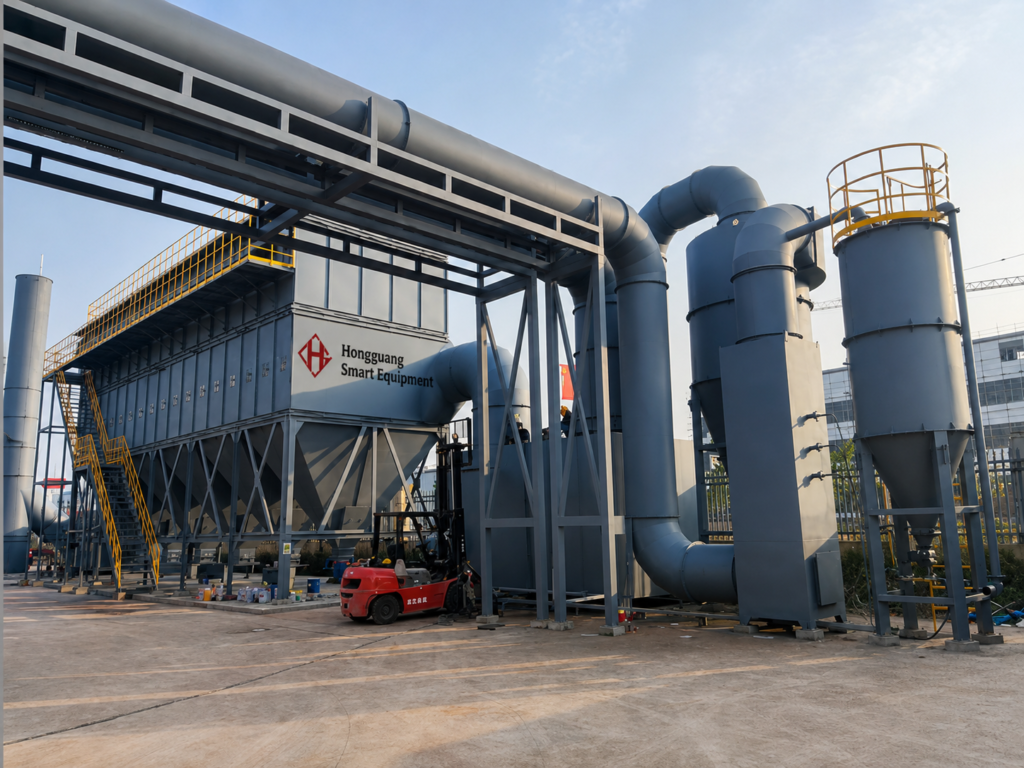
Fuel availability created the second major decision. The customer’s site could not rely on a natural-gas supply, while LPG was available locally. We therefore proposed an LPG-fired melting furnace instead of carrying a standard fuel assumption into the project. The furnace capacity and combustion arrangement will be selected from the feedstock route and required metal flow to the caster. LPG storage, pressure regulation, burner controls, ventilation, fire protection and local approvals must be coordinated with the customer’s utility and safety design; they are part of the plant interface, not details to settle after delivery.
The visit established a practical basis for detailed engineering. The line concept now reflects the actual foundation and fuel conditions, while the final furnace package, casting section, stand arrangement, output and environmental scope will be completed after the material specification, product diameter, plant survey and utility data are confirmed. For a new facility, connecting the equipment scope to the building, utilities and product requirements at this stage produces a quotation that is more useful for budgeting, civil design and implementation planning.
For a site-constrained copper project, a preliminary building drawing is as valuable as the target output. Floor levels, column spacing, headroom, crane capacity, foundation limits, fuel, power, cooling water and the route for finished coils should be available before the main equipment arrangement is fixed. Reviewing them early reduces redesign at the civil and installation stages.
Planning a Site-Constrained Copper Rod Line?
Tell us what you want to produce and where the equipment will be installed. Share the details you already have; our team can help clarify the remaining requirements.
Explore the Copper Rod Continuous Casting and Rolling Line to review typical configurations and the available equipment scope.
Plant-condition and utility review
Process and two-level layout engineering
Furnace and environmental interfaces
Installation and commissioning support to the agreed project scope