Production-Line Brief
Location: Nanchong, China
Feedstock: Prepared scrap copper
Melting capacity: 120-tonne furnace
Cast section: 3,800 mm² cast bar
Finished product: 8 mm copper rod
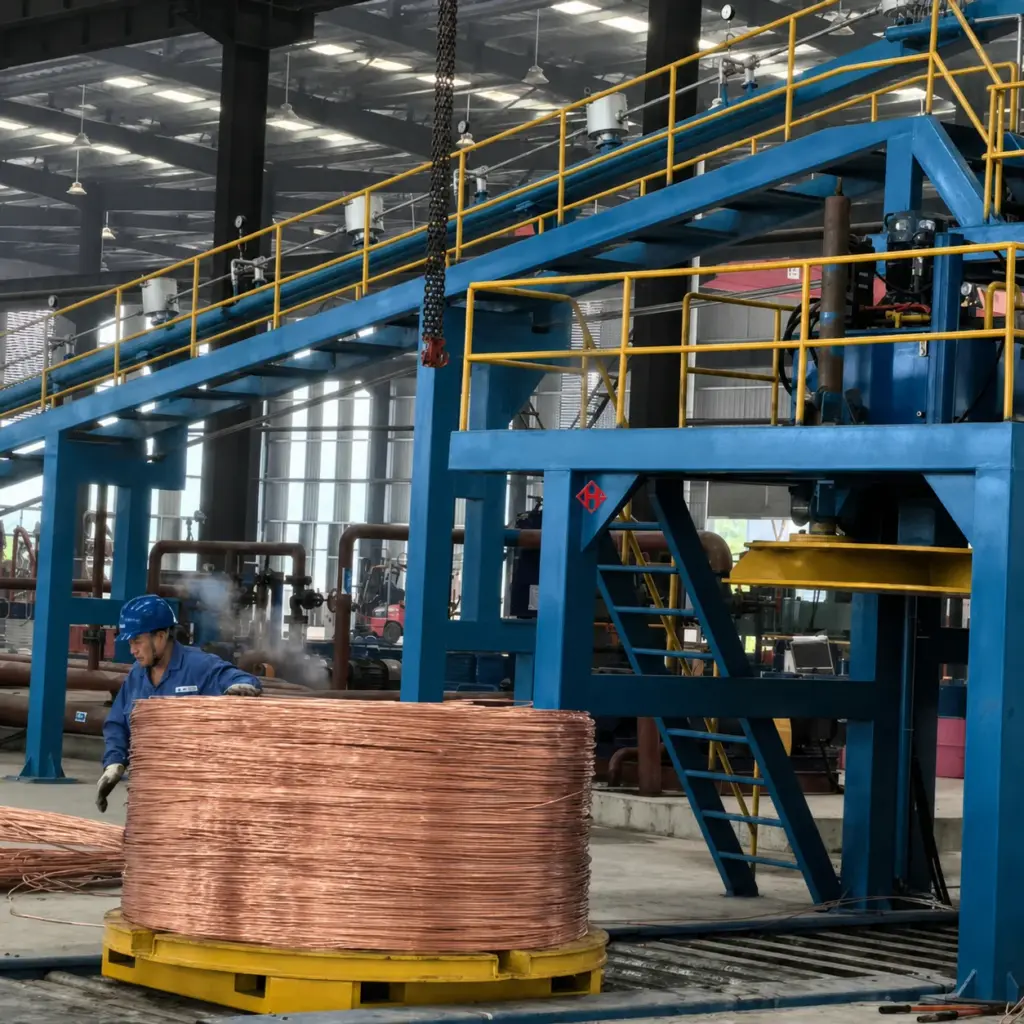
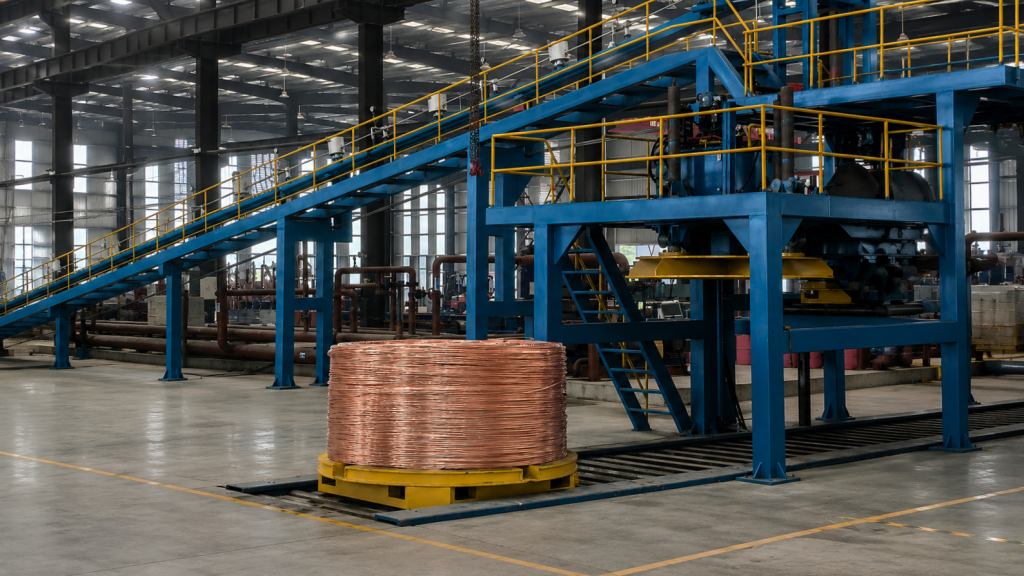
An operating copper rod line in Nanchong uses a 120-tonne melting furnace and a 3,800 mm² cast bar as the basis for producing 8 mm copper rod from prepared scrap-copper feedstock. The project illustrates why line configuration must be considered as a continuous route: melt preparation, casting, rolling, cooling and rod collection each establish conditions for the next stage.
A larger cast section changes the rolling route
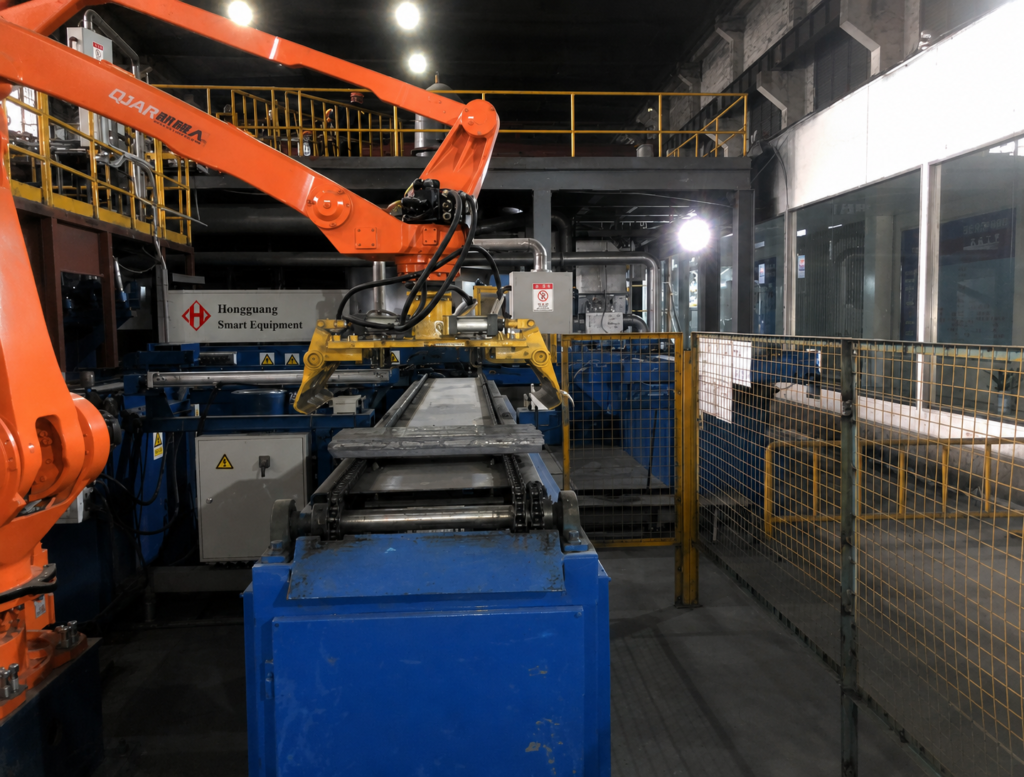
The furnace and casting system are arranged to supply the rolling mill with a cast bar of defined section and condition. Melt control, metal delivery and casting stability are especially important when recycled feedstock is used, because variation at the front of the line can affect rolling behaviour and the consistency of the finished rod. The 3,800 mm² section also requires a reduction schedule suited to the available rolling power and the target 8 mm product.
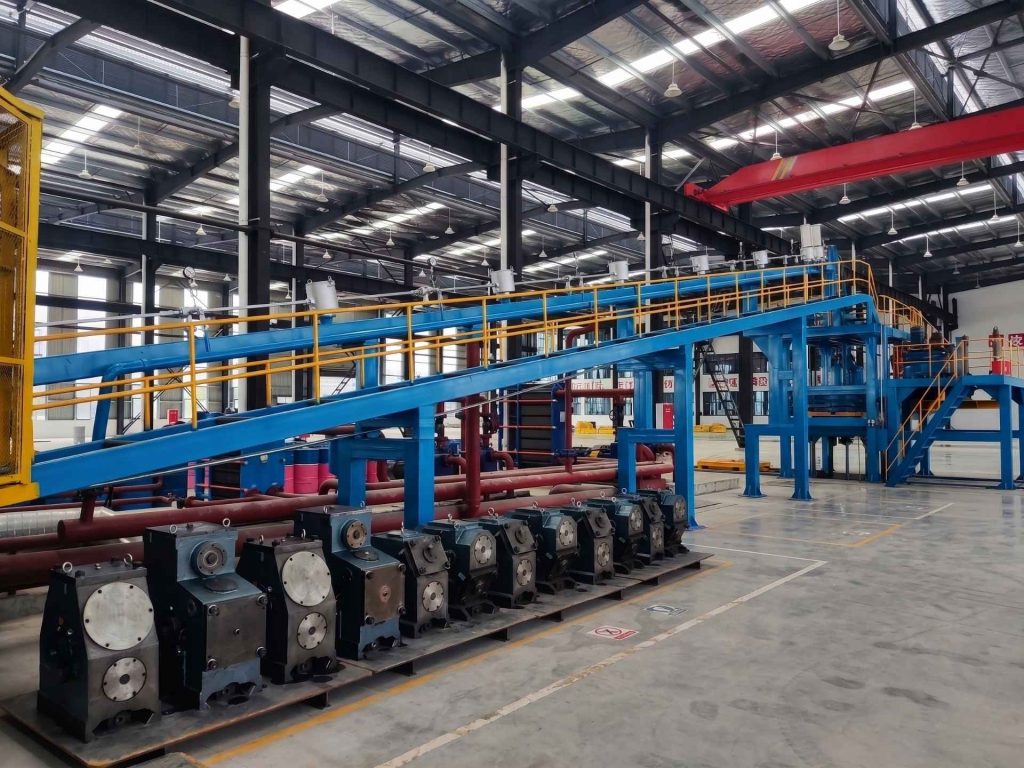
Rather than asking one group of stands to perform the entire reduction, the line separates roughing and finishing duties. The roughing section carries out the major reduction and establishes a controlled intermediate section. The finishing section then brings the material to the final diameter while coordinating speed, guidance and cooling. This division helps the mill designer balance deformation, drive load, temperature and product handling across the line.
Engineering the interfaces around the mill
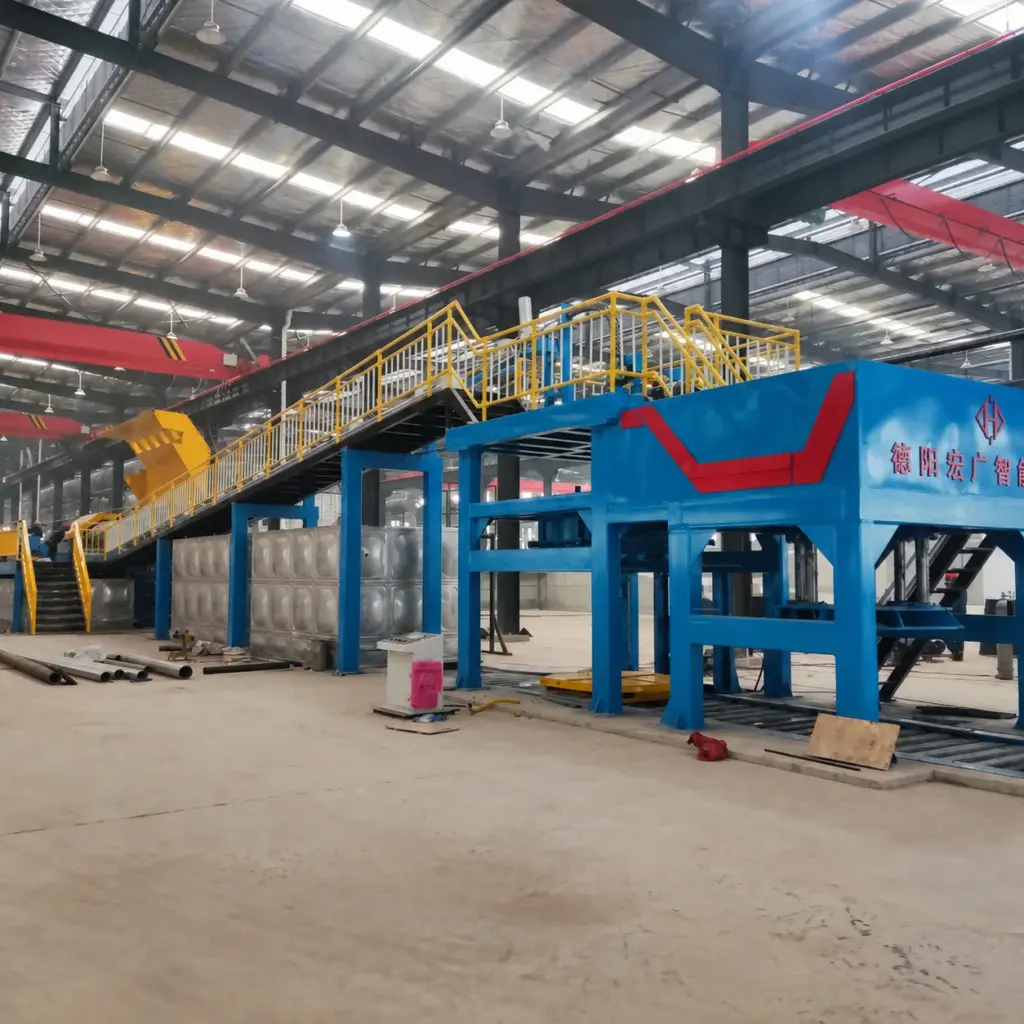
A practical copper rod project extends beyond the rolling stands. Furnace charging, fume extraction, cooling water, electrical distribution, foundations, access for maintenance and the collection system must all fit the customer’s plant. The line layout therefore needs to be developed around the building and utility conditions as well as the nominal production target.
For operators, a clear control philosophy is equally important. Start-up sequences, interlocks and line-speed coordination should make the relationship between casting and rolling visible without creating unnecessary complexity. Maintenance access and replaceable wear components also need to be considered before the equipment layout is fixed, particularly where production space is limited.
Customers planning a similar 8 mm copper rod line can send us their feedstock specification, expected annual output, power and fuel conditions, available plant dimensions and required product standard. We will use those inputs to compare furnace, casting and rolling arrangements and define a line concept suited to the project rather than selecting equipment in isolation.
Defining a Complete Copper Rod Line
Tell us what you want to produce and where the equipment will be installed. Share the details you already have; our team can help clarify the remaining requirements.
Early review of these inputs reduces layout changes and helps establish a realistic supply scope.
Preparing a copper rod project? Send the production inputs to our engineering team.