Technology Brief
Application: Aluminum can-body stock and packaging strip
New casting configuration: 1–2 m wide; 16–19 mm as-cast thickness
Casting capacity: 20–40 t/h, depending on configuration
Final strip gauge: 0.245 mm after downstream rolling and annealing
We have introduced an integrated twin-belt aluminum casting and rolling configuration for producers of beverage-can body stock and other packaging materials. The route connects continuous casting with hot rolling, subsequent cold reduction and annealing, so that the cast material and the finished thin strip are planned as parts of one production process. It is intended for aluminum processors developing a can-stock operation and looking at the complete equipment route, rather than a casting machine alone.
The new casting configuration covers widths of 1–2 m and an as-cast thickness of 16–19 mm, with a casting capacity of 20–40 tonnes per hour depending on the selected configuration. These figures describe the casting stage, not the output of finished can-body coil. This is a dedicated higher-capacity can-stock configuration, separate from the standard strip-line configurations in our double-belt aluminum equipment range. The downstream mills and handling equipment are matched to the alloy, finished dimensions and production schedule required for the project.
From cast slab to 0.245 mm can-body stock
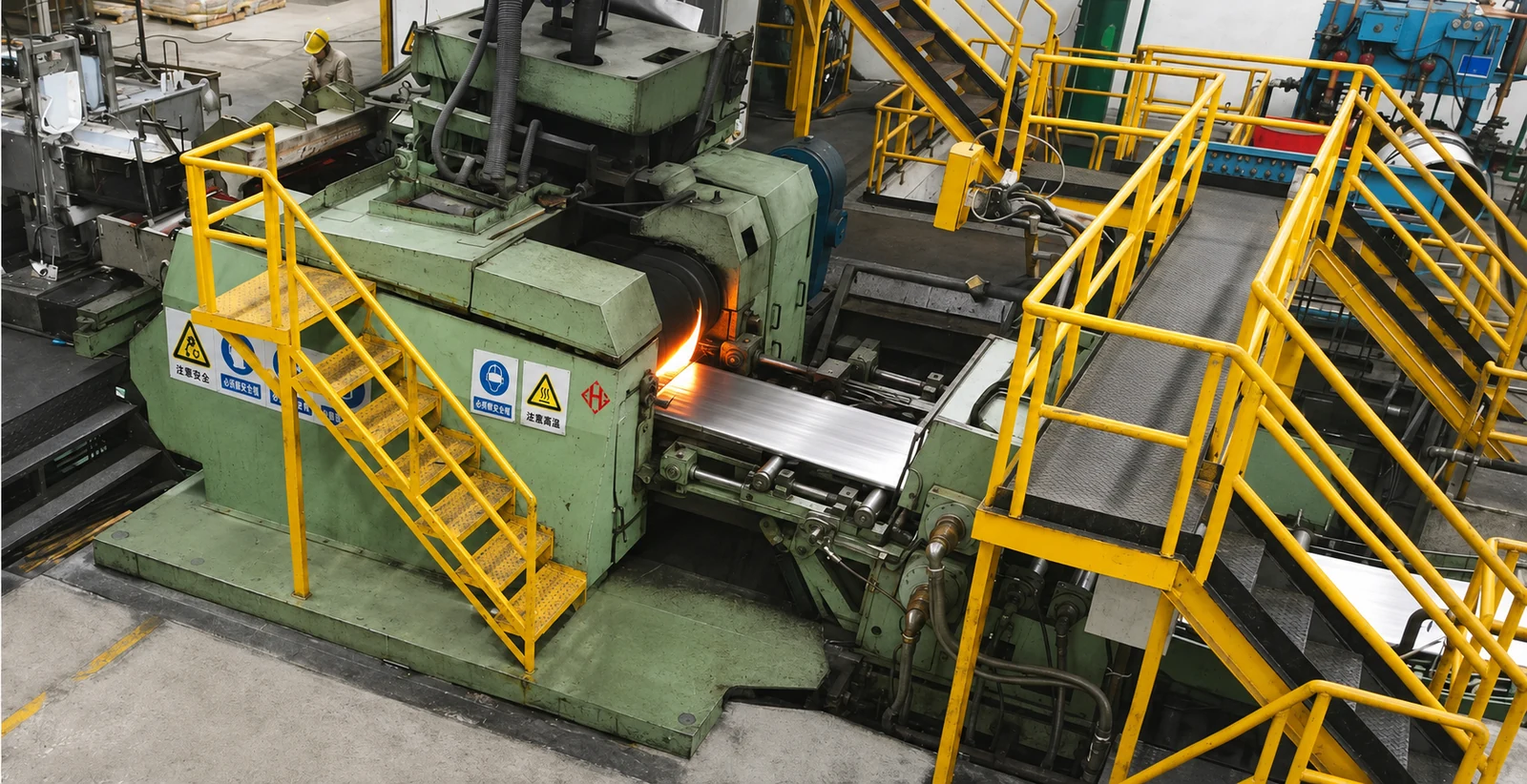
The twin-belt caster produces a continuous aluminum section that feeds the rolling route. Hot rolling makes the first major reduction in thickness, after which successive cold-rolling passes reduce the material toward its final gauge. Intermediate annealing is incorporated into the processing schedule to manage work hardening and prepare the strip for further reduction. The casting thickness and finished coil thickness therefore describe different stages of the line; the caster does not directly produce the thin strip used by a can manufacturer.
With the complete downstream rolling and annealing route, the configuration is designed to produce finished strip at 0.245 mm for can-body applications. Gauge is only one part of that requirement. The alloy, temper, surface condition and forming properties must also suit the customer’s can-making process. We develop the reduction and heat-treatment schedule around those requirements, with the final material specification agreed for the intended application rather than treating a single thickness as a universal can-stock standard.
Planning the complete packaging-strip route
Our approach brings the casting equipment, hot and cold rolling mills, annealing equipment, drives and automation into a coordinated line concept. The process arrangement is developed for continuous, large-volume production, with attention to material transfer, maintenance access and the space available in the plant. The benefit of this integrated approach is a clearer connection between the incoming metal, the intermediate strip and the coil delivered to the customer’s next process; actual output and operating costs remain dependent on the selected product mix and plant conditions.
For a new can-stock project, the most useful starting point is the finished material: its application, alloy, width, thickness and required forming performance. A target output and the installation location help us develop the initial equipment proposal. From there, we review the casting duty, rolling schedule, annealing requirements and interfaces with the customer’s other facilities. If some of these details are still being defined, our team can work through them with you as the project develops.
This new configuration expands our offering for aluminum packaging materials while keeping the process discussion focused on the finished product. To review the equipment route, visit our aluminum can-stock production line page. For a can-body stock project or another thin-strip application, speak with our engineering team. Tell us what you want to produce and the production target you have in mind; we can help establish the next steps without requiring a complete plant specification at the first enquiry.
Planning an Aluminum Can-Stock Line?
Tell us the packaging material you want to produce, your target output and the installation country. You do not need a complete specification to begin a discussion with our engineering team.
We review the casting, rolling and annealing route together with your finished-strip requirements.